MILL ON INDIA
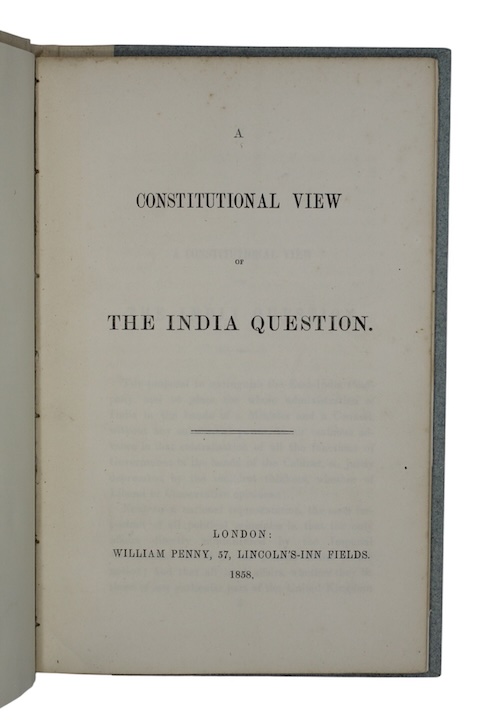
A constitutional view of the india question.
London.
William Penny, 1858.
First edition.
10pp.
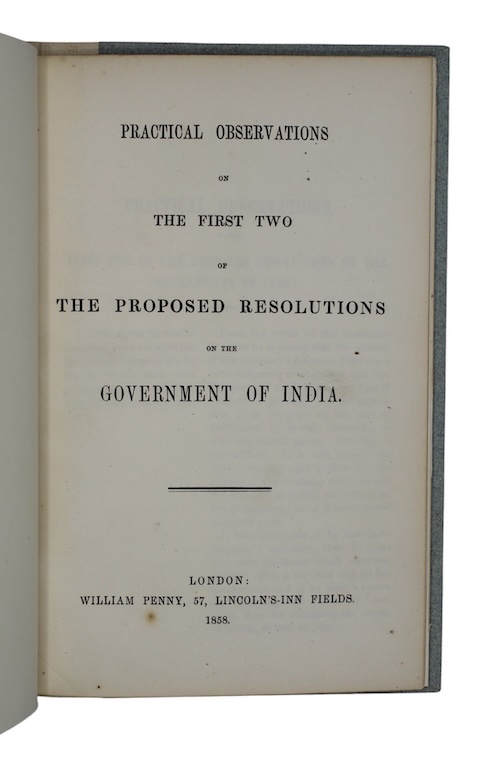
[Bound with:] [MILL, John Stuart]. Practical observations on the first two of the proposed resolutions on the government of india. London. William Penny, 1858. First edition. 10pp.
[And:] [MILL, John Stuart]. A president in council the best government for india. London. William Penny, 1858. First edition. 8pp.
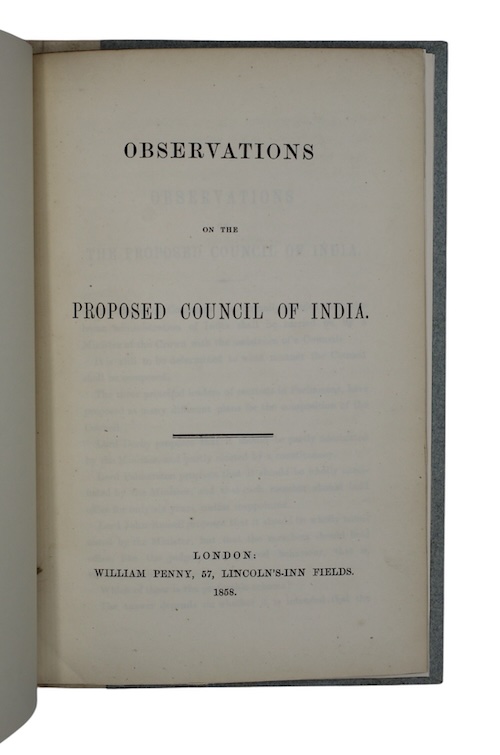
[And:] [MILL, John Stuart]. Observations on the proposed council of india. London. William Penny, 1858. First edition. 7pp, [1].
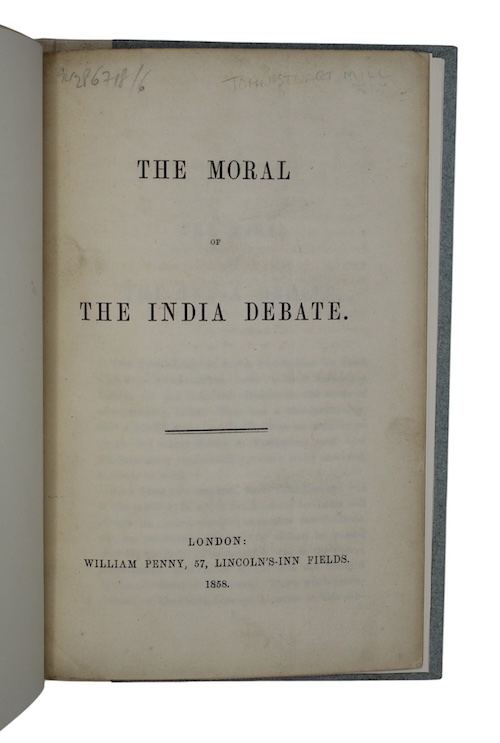
[And:] [MILL, John Stuart]. The moral of the india debate. London. William Penny, 1858. First edition. 10pp.
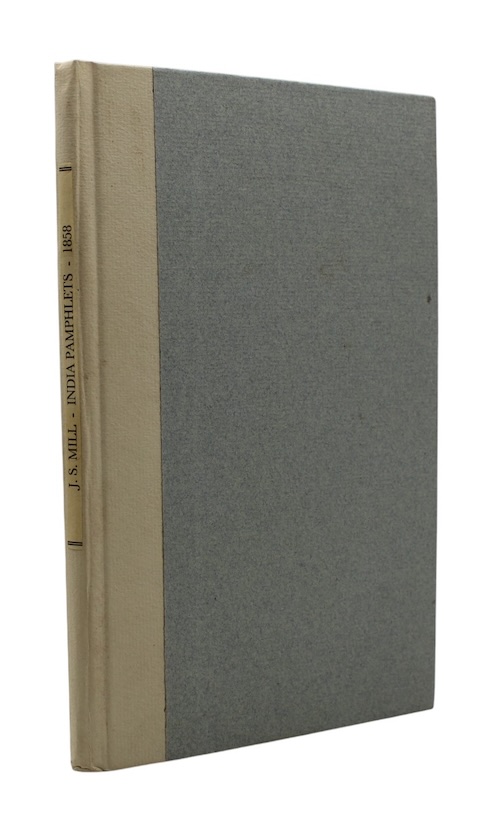
8vo. Modern two-tone paper boards. Clean and crisp.
[Bound with:] [MILL, John Stuart]. Practical observations on the first two of the proposed resolutions on the government of india. London. William Penny, 1858. First edition. 10pp.
[And:] [MILL, John Stuart]. A president in council the best government for india. London. William Penny, 1858. First edition. 8pp.
[And:] [MILL, John Stuart]. Observations on the proposed council of india. London. William Penny, 1858. First edition. 7pp, [1].
[And:] [MILL, John Stuart]. The moral of the india debate. London. William Penny, 1858. First edition. 10pp.
8vo. Modern two-tone paper boards. Clean and crisp.
A coherent sammelband of five concurrently published pamphlets relating to the governance of India by philosopher and economist John Stuart Mill (1806-1873).
In 1856, Mill was promoted to the chief examinership at the East India Company. Following the Indian Mutiny, Mill devoted his efforts to defending the Company's administrative record - which he argued had been greatly beneficial to India - and to countering proposals for a transfer to direct rule from the British government, the primary concern of the present pamphlets.
£ 950.00
Antiquates Ref: 33594
In 1856, Mill was promoted to the chief examinership at the East India Company. Following the Indian Mutiny, Mill devoted his efforts to defending the Company's administrative record - which he argued had been greatly beneficial to India - and to countering proposals for a transfer to direct rule from the British government, the primary concern of the present pamphlets.